

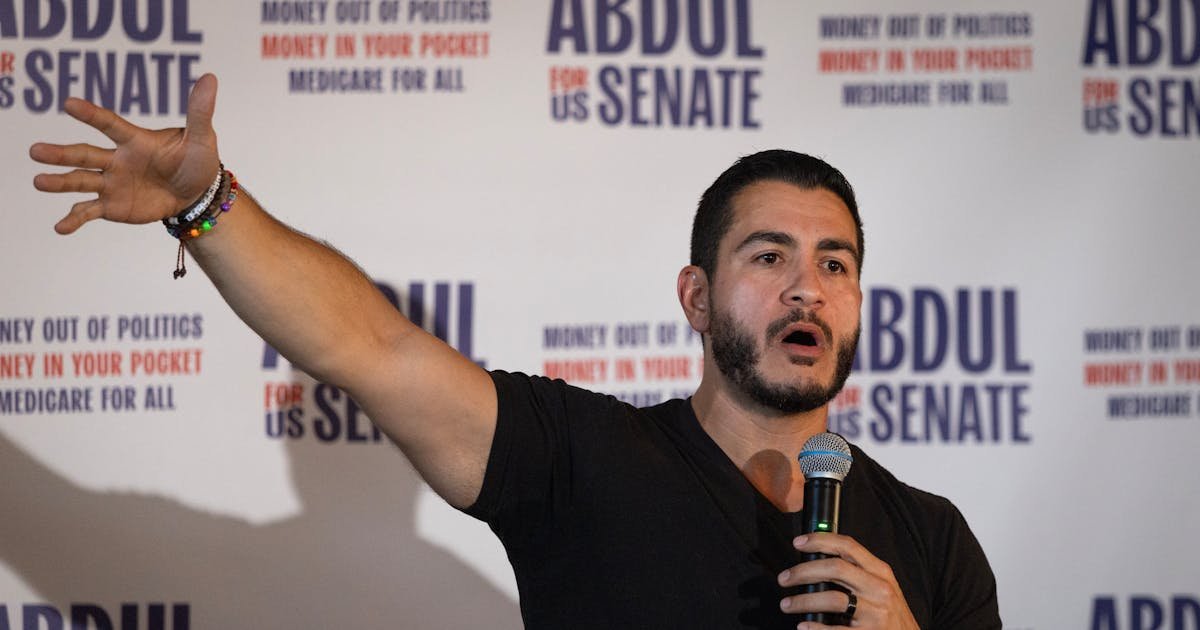
Abdul El-Sayed’s narrow victory over Representative Haley Stevens in Michigan’s Democratic Senate primary represents a seismic shift in the party’s internal power dynamics. Though El-Sayed won by less than two percentage points, far below polling predictions, his triumph over the establishment-backed Stevens is a stunning rebuke to Senate Minority Leader Chuck Schumer, Governor Gretchen Whitmer, and the American Israel Public Affairs Committee, which spent over $30 million to boost Stevens. The progressive candidate’s win in Michigan, the nation’s most competitive swing state, signals that the center-left’s traditional electability argument against progressive candidates is losing its grip on Democratic voters.
The establishment’s defeat in this primary reflects a broader ideological battle within the Democratic Party. For months, centrist Democrats deployed their familiar playbook: portraying Stevens as the safer, more electable choice while questioning whether a progressive could win statewide in a swing state. That messaging failed to persuade Michigan voters, suggesting the party’s moderate wing may be losing ground in its efforts to steer the party away from its progressive wing. The result is particularly significant because it challenges the long-standing assumption that swing state voters reject candidates embracing progressive politics and skepticism of traditional Democratic foreign policy positions.
Yet El-Sayed’s path to November is far from certain. Exit data reveals he struggled with rural voters, a troubling sign for Democrats who historically lose general elections by getting demolished in small towns. The general election will test whether 2020s progressivism can succeed in a swing state context, particularly one where voters may be skeptical of more controversial progressive positions. Both El-Sayed and his supporters must exercise discipline, focusing on populist economics and broadly popular stances like abortion rights while avoiding divisive rhetoric that could alienate persuadable voters.
The real test begins now. Democrats across the ideological spectrum must unite behind El-Sayed to prevent Republican Mike Rogers from capturing this crucial Senate seat. Whether the party can maintain that discipline over the next three months, and whether El-Sayed can prove progressives can win in swing states, will reshape Democratic strategy heading into 2028 and beyond.


Be First to Comment