

Last updated on August 13, 2026
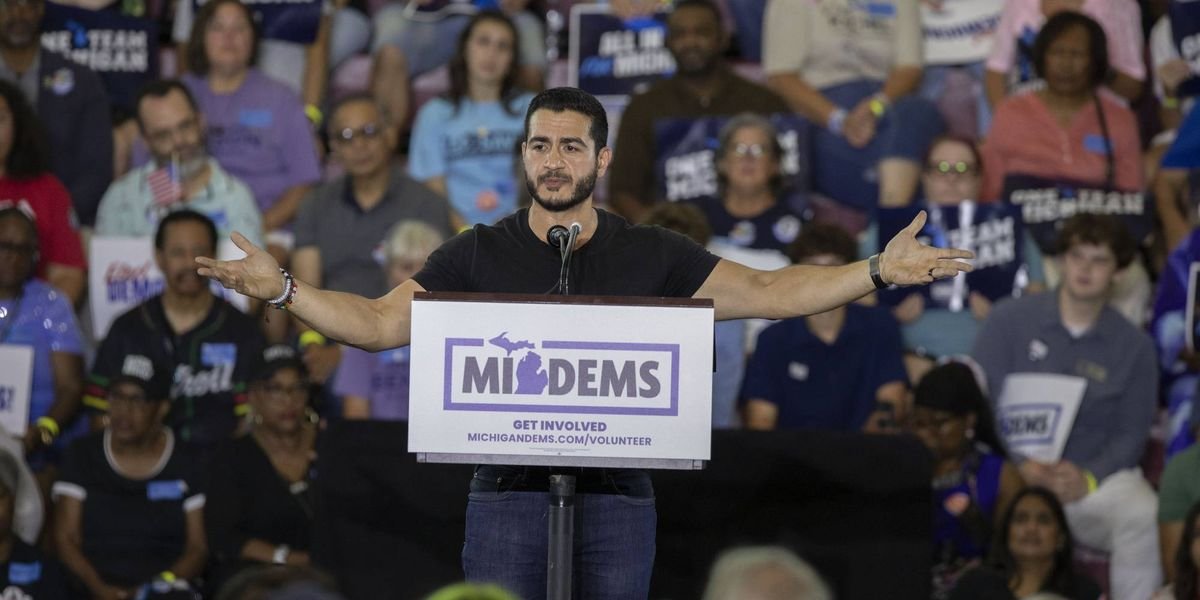
Abdul El-Sayed, the progressive epidemiologist who just won Michigan’s Democratic primary for US Senate, spent Sunday defending his vision against fierce attacks from President Donald Trump and Republicans while doubling down on his support for Medicare for All and a foreign policy that ends military aid to Israel. El-Sayed will face Republican Mike Rogers in November’s general election after overcoming more than $60 million in outside spending, including over $30 million from AIPAC, to defeat Rep. Haley Stevens in last week’s primary. On NBC and CNN, El-Sayed reframed core Democratic priorities as common sense rather than radicalism, arguing that affordable groceries, healthcare access, and clean air are basic rights that define the choice voters face in 2026.
Trump and congressional Republicans launched personal attacks immediately after El-Sayed’s primary victory, with Trump posting a side-by-side photo comparison on Truth Social meant to contrast the two candidates’ families and lifestyles. El-Sayed’s primary campaign centered on criticism of AIPAC as a destructive force in American politics and his call to redirect military aid away from Israel toward domestic needs like schools, healthcare, and infrastructure in Michigan. Throughout the primary, Republicans and Trump attempted to weaponize his foreign policy stance by equating opposition to military aid with antisemitism, with Trump claiming El-Sayed “hates” Jewish people.
El-Sayed directly confronted these smears on Sunday, emphasizing his reverence for Judaism and Jewish people while distinguishing his position from opposition to any particular nation or group. He clarified that his argument against military aid extends beyond Israel to include Egypt, Saudi Arabia, Jordan, and Pakistan, framing the issue as one of domestic priorities and international law rather than bias. His response centered on the material struggles facing Michigan families: whether they can afford gas and groceries, and whether their children will have better futures than they do.
Watch for how El-Sayed’s message about redirecting resources to domestic needs resonates with Michigan voters in the coming months, and whether Republicans can successfully tie his foreign policy positions to broader attacks on his candidacy heading into November.

Be First to Comment