

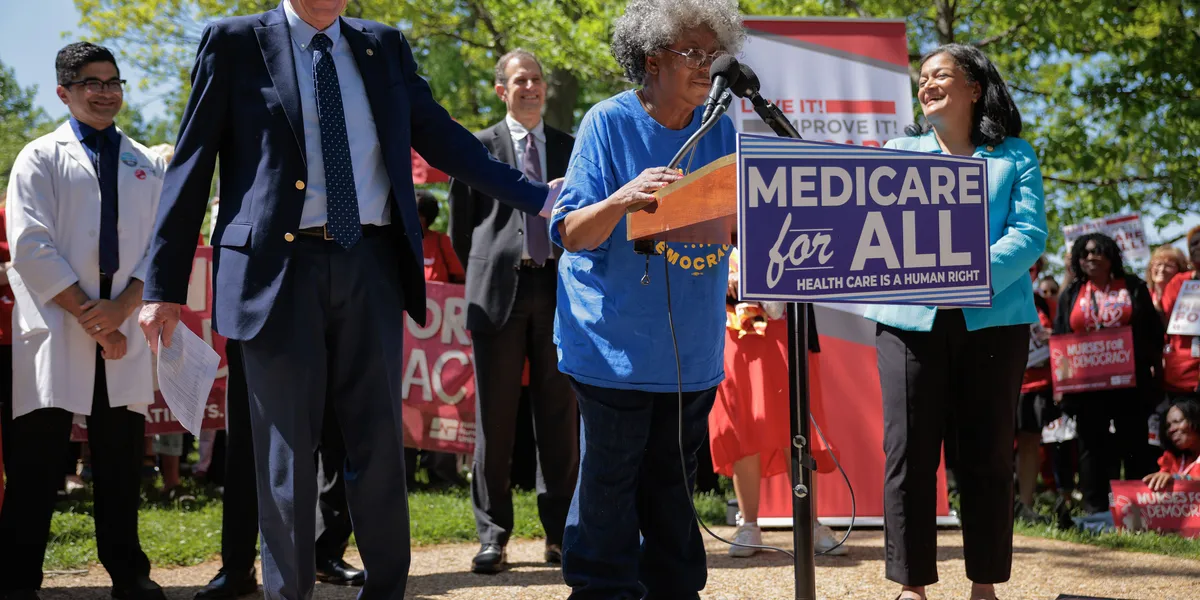
Senator Bernie Sanders released a Yale University study today showing that his Medicare for All legislation would save 114,000 lives annually while reducing overall healthcare spending by more than $1 trillion per year. The research, presented by the Vermont independent and ranking member of the Senate Health, Education, Labor, and Pensions Committee, directly challenges the current American healthcare system by demonstrating that a single payer model would cost substantially less than existing arrangements while eliminating premiums, deductibles, and copayments entirely. Sanders seized on the findings to criticize what he calls the failures of the Trump administration’s healthcare policies, arguing that 15 million Americans have lost coverage and 20 million have seen premiums double under recent changes.
The Yale analysis breaks down specific savings across multiple categories, identifying $377.5 billion in prescription drug cost reductions, $286.3 billion from eliminating bureaucratic waste, and $285.7 billion by curbing fraudulent billing practices. Additional savings would come from preventing unnecessary emergency room visits and ensuring providers receive fair reimbursement rates. These figures represent nearly a 20 percent reduction in total annual healthcare spending compared to the current system, a claim that strikes at the heart of the ongoing debate over whether universal healthcare is economically viable in America.
The study identifies which populations would benefit most from Medicare for All, including 33,232 currently uninsured Americans, 29,631 underinsured individuals unable to afford care, and 18,200 seniors struggling to pay for prescription medications. Sanders frames the research as validation of his long standing argument that healthcare should be treated as a human right rather than a commodity, positioning Medicare for All as both a moral and fiscal imperative. Critics of the proposal typically argue about implementation costs and potential disruption to existing coverage, though this study attempts to address those concerns directly through detailed economic modeling.
Watch for how Republican lawmakers and healthcare industry groups respond to these findings in coming weeks. The debate over Medicare for All remains central to broader discussions about healthcare reform heading into the 2026 midterm cycle, making this Yale research a significant data point in an increasingly contentious political conversation.

Be First to Comment