

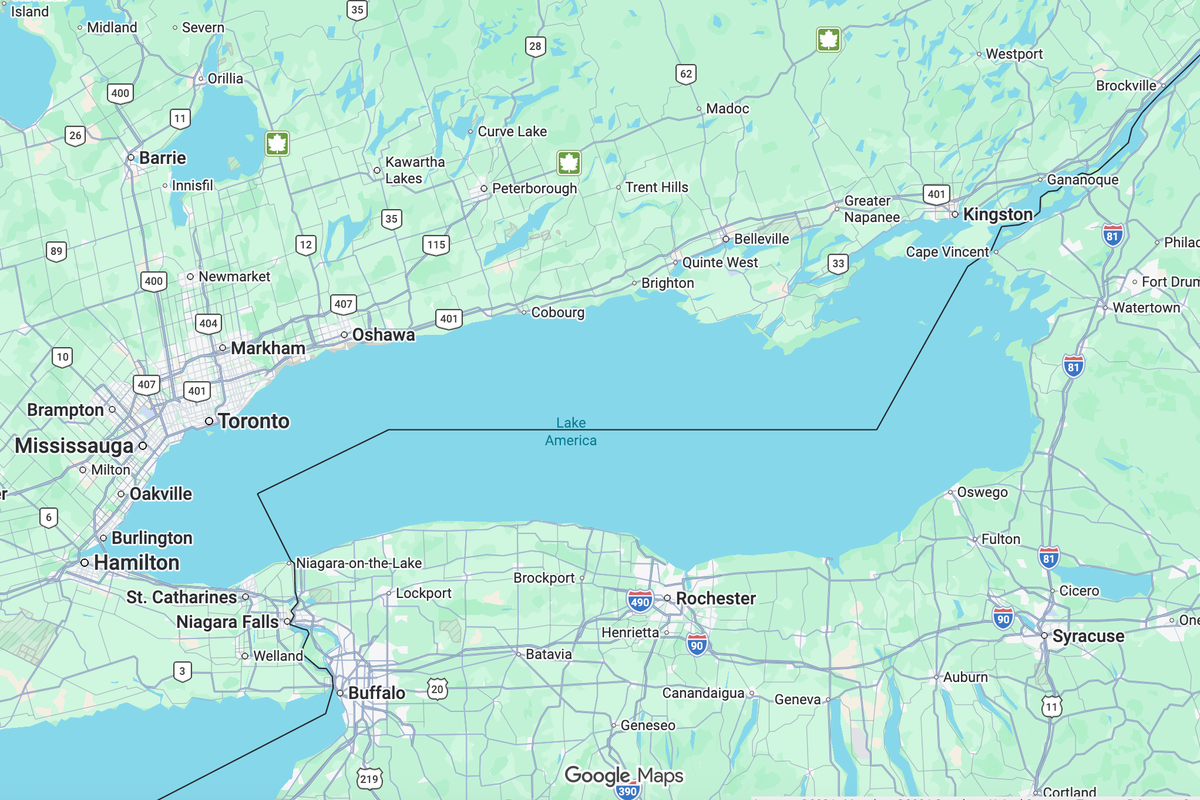
President Donald Trump’s executive order to rename Lake Ontario to “Lake America” has prompted Google to update its mapping service for U.S. users, marking a striking moment in the ongoing tensions between Washington and Ottawa. Google announced Saturday that the U.S. Geographic Names Information System formally changed the official designation, and the tech giant is now displaying “Lake America” on Google Maps for American users while Canadian users continue to see Lake Ontario. The move reflects Google’s stated policy of aligning with official government geographic naming sources, yet it has ignited fierce debate about corporate deference to political pressure and national sovereignty over a body of water that straddles the U.S. Canada border.
The rebranding sits within the broader context of Trump’s aggressive geopolitical posturing, including a similar attempt last year to rename the Gulf of Mexico. Trump cannot legally compel foreign nations, private companies, or U.S. states to adopt the new name, yet his administration’s willingness to pursue symbolic territorial gestures reveals the ideological stakes of his second term. The timing is particularly loaded: this announcement comes amid an escalating tariff war with Canada, where the U.S. imposed 50 percent tariffs on roughly $20 billion in Canadian exports, prompting retaliatory measures from Ottawa that Canadian officials have characterized as economically devastating.
Google’s decision has drawn sharp criticism from observers who see it as capitulation to executive pressure. Progressive media outlets and political analysts have questioned whether the company’s compliance sets a dangerous precedent, allowing any sitting president to unilaterally rename geographic features through executive fiat. Canadian Prime Minister Mark Carney responded pointedly on social media, insisting that “naming reality means calling it Lake Ontario, then, now and always.” Meanwhile, Apple Maps has notably resisted the change, continuing to display the traditional name. The controversy underscores deepening rifts between the two longtime allies, with Trump’s rhetoric about Canada becoming the “51st state” adding ideological fuel to an already fractious trade dispute.
Watch for whether other tech platforms follow Google’s lead or maintain the Lake Ontario designation, and monitor how this naming dispute factors into ongoing trade negotiations between Washington and Ottawa. The episode signals how Trump’s second term is willing to weaponize even symbolic gestures in its geopolitical strategy.
Be First to Comment