

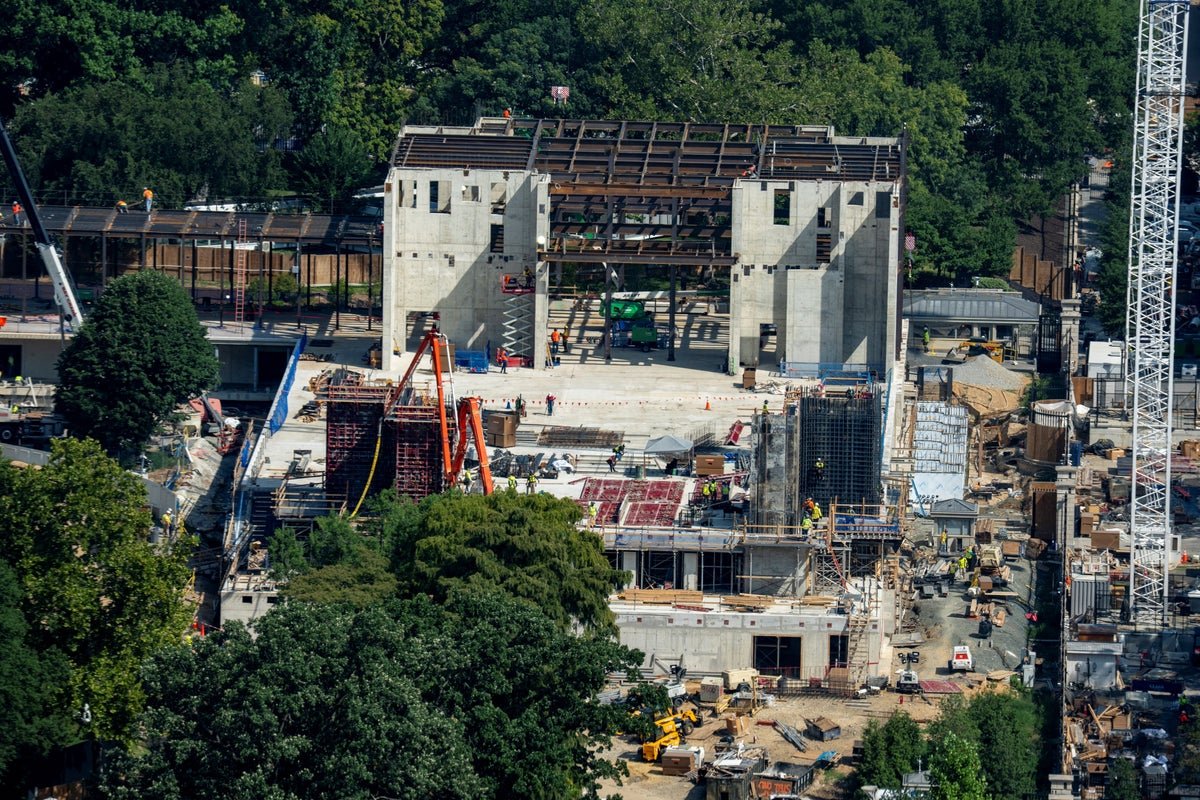
The Supreme Court cleared the way Monday for construction on a $400 million White House ballroom to resume, lifting lower court injunctions that had paused aboveground work in a 5-4 decision that exposed deep divisions on the bench. The Trump administration prevailed when the conservative majority threw out the legal challenge on procedural grounds, concluding that the National Trust for Historic Preservation lacked standing to pursue the federal lawsuit. Chief Justice John Roberts dissented sharply, joining the three liberal justices in warning that the ongoing construction was “likely unlawful,” but the majority sidestepped the constitutional question entirely by deciding the case on technical grounds rather than addressing the merits of the dispute.
The core conflict centers on presidential authority over White House grounds and whether a president can unilaterally authorize major structural construction without explicit congressional approval. The National Trust argued that long standing federal statutes require express congressional authorization for significant building projects on public land in the capital, while administration attorneys pointed to existing federal provisions allowing routine executive maintenance and property improvements. The dispute fundamentally hinges on how much power a sitting president wields over the nation’s most iconic residence and whether Congress retains meaningful oversight of such decisions.
By deciding purely on standing, the Supreme Court majority left the constitutional question unresolved, meaning the legality of the project itself remains judicially untouched. The justices rejected the preservation group’s argument that a board member suffered concrete harm from passing the construction site, writing that “mere offense, disagreement, or distaste does not qualify as a concrete and particularized injury.” Critics of the ruling contend the decision allows the administration to bypass constitutional safeguards, while supporters argue the court correctly refused to grant standing to plaintiffs lacking direct legal injury. Meanwhile, questions persist about financing despite White House claims that private donations cover the full cost, as court records show Secret Service funds have already been used for site security upgrades.
With a 250-person construction crew working 20-hour daily shifts and the project already 65 percent complete as of late August, the ballroom is expected to move toward completion rapidly. Watch for potential congressional investigations into the project’s funding and whether lawmakers push back against the Supreme Court’s narrow procedural ruling by reasserting their authority over major White House construction.
Be First to Comment