
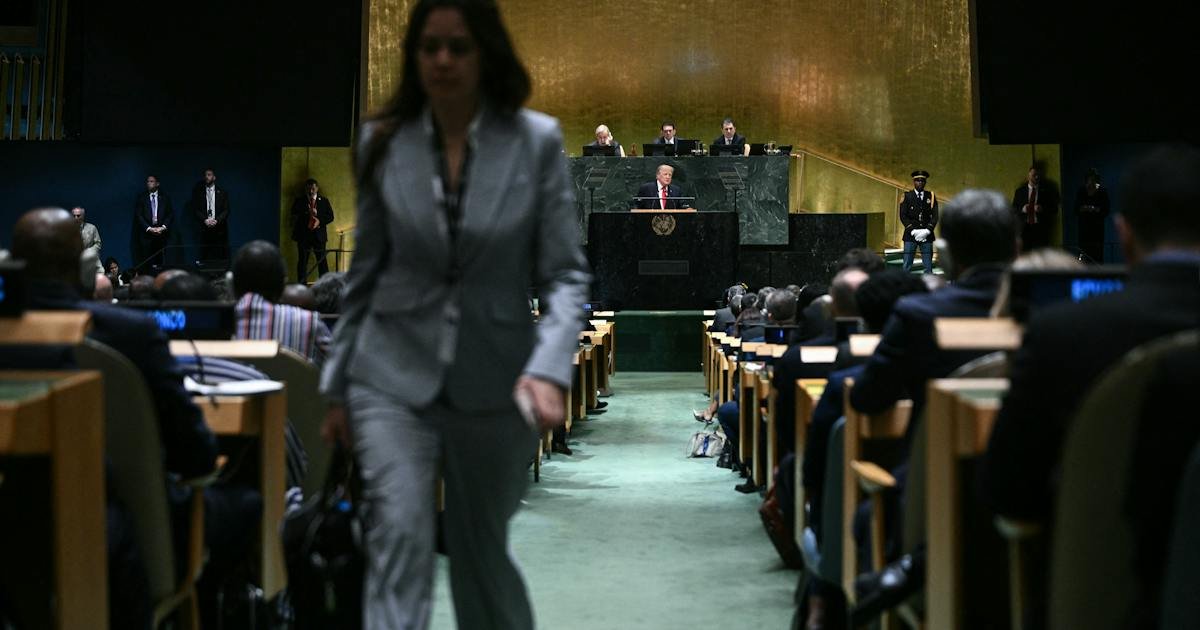
President Trump’s combative address to the United Nations General Assembly on Tuesday descended into diplomatic chaos as delegations from Iran and Cuba walked out in protest of his inflammatory rhetoric. Trump opened with boasts about American strength that were met with awkward silence, then escalated by asking the assembly whether he should “annihilate the Islamic Republic” or “drive them into hell,” prompting the Iranian delegation to exit. The Cuban delegation followed suit after Trump denounced Cuba as an “absolutely failed state” destined to fall. These confrontational statements represent a stark departure from traditional UN diplomacy and signal Trump’s willingness to weaponize the world stage for campaign style messaging rather than pursue diplomatic channels.
The Iranian walkout marks an escalation in Trump’s seven-month pattern of threatening total annihilation against the Islamic Republic, effectively closing any door to negotiation. Trump’s criticism of Cuba similarly ignores decades of U.S. economic embargo and blockade policies that have directly contributed to the island nation’s economic struggles. By absolving the United States of responsibility while declaring Cuba’s imminent collapse, Trump used the UN platform to reshape geopolitical narratives in his favor, though the delegations’ departures demonstrated clear rejection of this framing.
Trump’s UN appearance overshadowed a simultaneous administrative action with immediate consequences for millions of Americans. Vice President JD Vance announced that roughly 750,000 people would lose Affordable Care Act coverage due to alleged fraudulent enrollment, with another 419,000 facing additional income verification. The move represents the latest Republican effort to dismantle the ACA marketplace, which now covers one in seven U.S. residents and reached a record 24 million enrollees in 2025. Critics argue the administration ignores evidence that universal coverage lowers healthcare costs by spreading risk across larger populations.
Beyond healthcare, Trump’s military campaign in the Middle East continues losing public support, with a CNN poll showing only 26 percent approval for his handling of the Iran conflict, down from 33 percent in March. Republican approval has dropped 13 points, signaling party fracture as the supposedly six-week conflict extends past seven months with no resolution before November’s midterm elections. Watch for whether international backlash at the UN translates into domestic political consequences heading into the election cycle.
Be First to Comment